
SUMMARY
A full-day stag adventure across London in which the groom had gone missing and had to be located in time for the wedding to proceed. The experience combined city-wide puzzle trails, hidden physical caches, live coordination between teams, integrated commercial venues, and a competitive leaderboard system, all delivered within a £100-per-person budget.
CONCEPT
The central conceit was simple: the groom had disappeared, and the wedding could not happen until he was found.
The narrative structure drew loosely on the wedding rhyme “something old, something new, something borrowed, something blue.” Each stage of the adventure would uncover one element, with the final realisation arriving only at the end of the day.
The design goal was to create a large-scale, multi-team experience across London that felt cohesive rather than fragmented, balancing competition with shared discovery. It had to be puzzle-led, but incorporate a broad array of activities so no one felt left-out and it wasn’t too cerebral a day on the whole.
PLANNING
Because this was a stag event, budget clarity was essential from the outset. The entire day, including dinner, drinks, and a major activity, needed to remain under £100 per person, which required careful selection of locations and activities that could deliver impact without excessive cost.
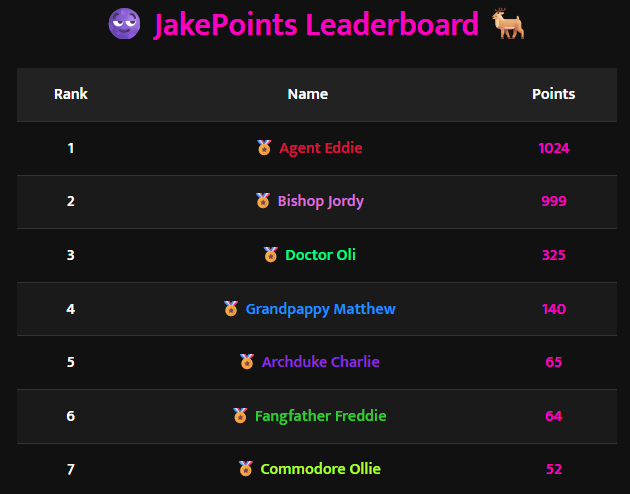
A significant portion of preparation focused on coordination systems. Participants were divided into teams, each managed through separate WhatsApp groups to allow controlled clue release, pacing adjustments, and narrative synchronisation across multiple locations. Alongside this, we built a live leaderboard powered by a spreadsheet, enabling real-time scoring updates, bonus challenges, and competitive tracking throughout the day.
Route design formed the other major component. Multiple paths through central London were mapped and then physically walked to test timings, crowd density, sightlines, and potential bottlenecks. Particular attention was paid to transition points where teams would converge, ensuring the experience felt fluid rather than fragmented.
We also liaised with external venues and businesses in advance to integrate them smoothly into the narrative, allowing commercial spaces to function as puzzle environments without disrupting their normal operations.
THE ADVENTURE
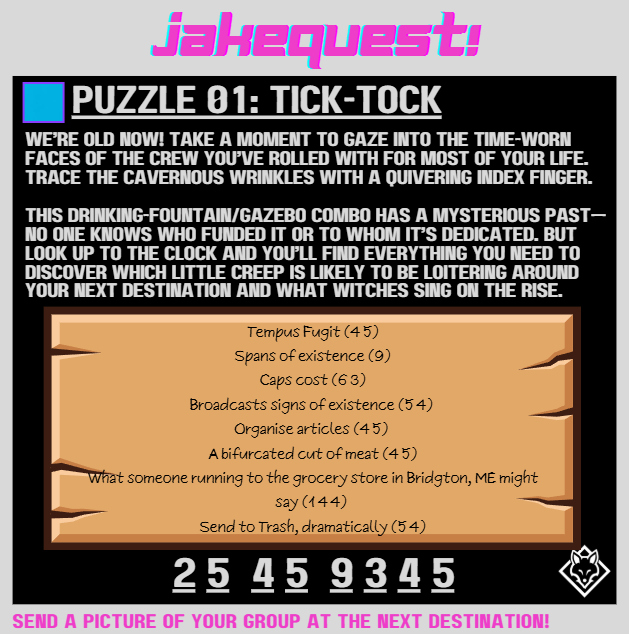
The day began with teams receiving their first puzzles via their WhatsApp groups, each leading to a different landmark within Hyde Park. From there, sequential clues moved them through additional locations before converging on a shared What3Words destination.
At first glance, the destination appeared empty. A prior clue instructed them to “look below the surface,” revealing access to a hidden underground luxury car park beneath the park. Each team held a fragment of a QR code. Only when combined could they gain entry.
Inside, the groom’s voice could be heard apparently coming from a locker. To unlock it, participants had to determine the order in which they had most recently communicated with the groom online, then use the final digits of their phone numbers to generate the combination. Inside they found drinks, snacks, a walkie-talkie, and the first narrative artefact: something old.
Shortly afterwards, following instructions over the radio, the groom himself appeared and joined the group.
The next phase moved into central London. A puzzle led teams to a Tube station where they had to interact with a hidden environmental feature to reveal their next destination. From there, teams were sent to different businesses. One group travelled to Foyles, where they collected a book pre-ordered under a coded alias. Solving layered clues led to the correct ISBN for another book in the shop, inside of which was the location of the next activity.
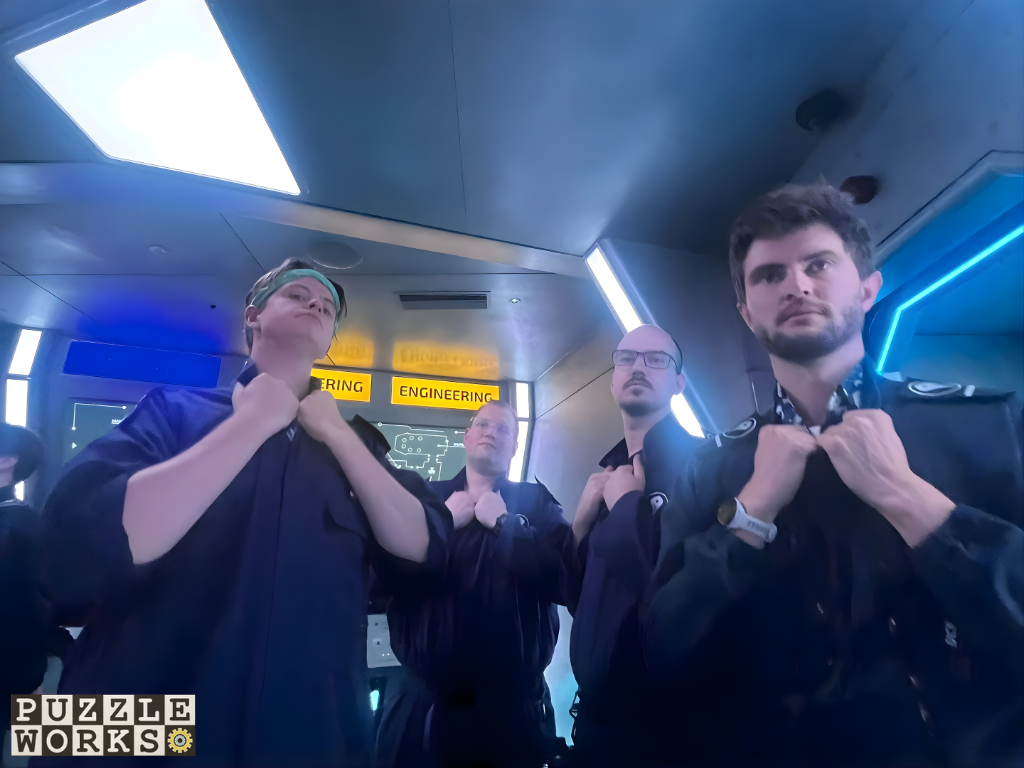
After regrouping for a brief pub stop, the participants travelled to Bridge Command in Vauxhall, an immersive starship simulation experience. Coordination with the venue allowed a seamless narrative handoff, with the highest-scoring participant receiving the next artefact, something new, during gameplay.
The final sequence of puzzles related to the upcoming wedding and ultimately revealed the dinner location.
At dinner, one question remained unresolved: what was missing?
The answer emerged when someone recognised the pattern. They had recovered something old, something new, and something borrowed throughout the day. To complete the set, they needed something blue. The winning move was simply to order a blue item.
Throughout the entire experience, a live leaderboard tracked points, bonus challenges, forfeits, and performance, maintaining competitive energy across teams as they moved through the city.
AFTERMATH
This adventure demonstrated how effectively large groups can be managed across a major city when digital coordination and physical design are carefully aligned. Real-time communication, live scoring, and staggered routing allowed multiple teams to operate independently while still feeling part of a single shared narrative.
Working with external venues proved particularly valuable, allowing high-production activities to be incorporated without losing coherence. The combination of physical puzzles, urban exploration, and live infrastructure created a form of lightweight augmented reality without specialised technology.
Most importantly, the day showed that scale does not require extravagance. With thoughtful design, even a constrained budget can support an experience that feels expansive.
And the groom did, in fact, make it to dinner.